May 7, 2026
Investigation of Splat Characteristics and In-Flight Particle Oxidation in HVAF-Deposited NiCoCrAlY Coatings
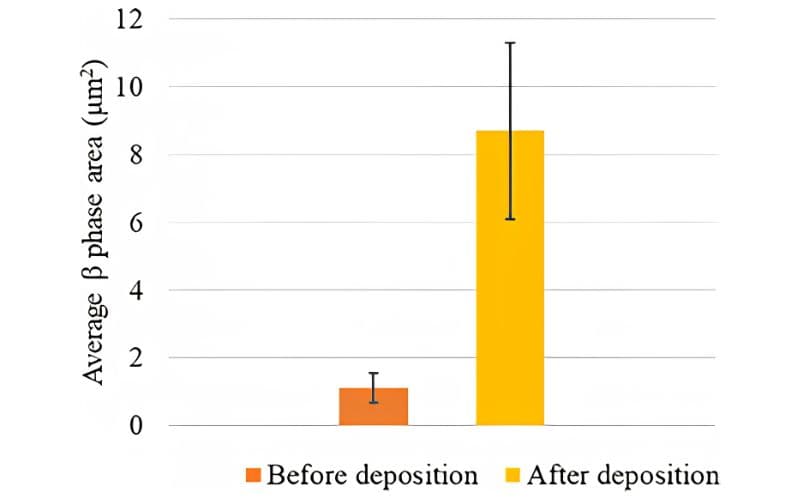
High-Velocity Air Fuel (HVAF) thermal spray process has emerged as a promising technique for depositing oxidation-sensitive MCrAlX coatings due to its combination of relatively low flame temperatures and high particle velocities. In this study, NiCoCrAlY coatings were deposited onto stainless steel substrates using two distinct sets of HVAF parameters, to investigate the in-flight particle behavior, oxidation and splat characteristics. In-flight particle diagnostics via AccuraSpray 4.0 enabled real-time monitoring of average particle temperature and velocity at deposition. The deposited coatings exhibited a combination of partially molten and fully deformed splats. Preliminary EDS confirmed localized carbon enrichment attributed to unburnt hydrocarbons under fuel-rich conditions. β-phase grain coarsening was observed post-deposition, potentially influencing long-term oxidation resistance through modified Al diffusion behavior. High-resolution EDS and FIB-LV-SEM analyses were conducted to assess potential nanoscale oxidation and confirmed minimal oxide formation on splats, with thin surface oxides measuring approximately 15 ± 3 nm. The coatings were further examined to assess the influence of deposition parameters on microstructure evolution, coating build-up, and in-flight oxidation behavior.
Originally published at Journal of Thermal Spray Technology (23 March 2026)
By Aravind Kumar Thoutam, Murilo Sergio Lamana, Amirhossein Mahdavi, Andre C. Liberati, Fadhel B. Ettouil, Ritvij Chandrakar, Stéphanie Bessette, Nicolas Brodusch, Raynald Gauvin, Ali Dolatabadi, and Christian Moreau