November 18, 2026
Ni–Cr Powders Modified with Rhenium as a Novel Coating Material—Physical Properties, Microstructure, and Behavior in Plasma Plume
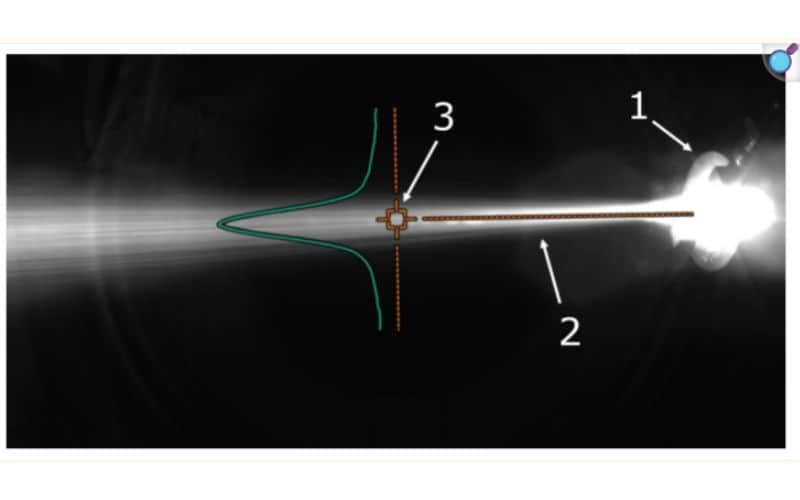
The aim of this work was to develop a new coating material based on Ni20Cr alloy modified with up to 50%wt. rhenium. The modification was carried out by the mechanical mixing of the base powder and ammonium perrhenate with the subsequent thermoreduction in an H2 atmosphere. The obtained powder consists of a nickel–chromium core surrounded by a rhenium shell. The characterization of the powders—including their microstructure, phase and chemical composition, density, flowability, particle size distribution, and specific surface area—was performed. The influence of plasma current intensity and hydrogen gas flow on in-flight particle temperature and velocity were investigated. The results indicate that there is interdiffusion between the base Ni20Cr and the rhenium shell, resulting in intermediary solid solution(s). The modified powders have a higher specific surface area and a lower flowability, but this does not prevent them from being used as feedstock in plasma spraying. In-flight measurements reveal that increasing the content of rhenium allows for the higher temperature of particles, though it also reduces their speed.
Key words: nickel alloys, rhenium, phase analysis, microstructure, plasma spraying, refractories, nonferrous metals, coatings, thermal spraying, powder metallurgy
Originally published at Materials (Basel) (2022 May 27)
By Adriana Wrona, Marcin Lis, Krzysztof Pęcak, Izabela Kalemba-Rec, Stanisław Dymek, Mirosław Wróbel, Katarzyna Bilewska, Katarzyna Kustra, Marek Stanisław Węglowski, and Piotr Śliwiński
